

Tek Gear Sports Bra Sizing Guide — How to Find Your Support Level
Getting your sports bra size right makes every difference between a confident workout and constant adjusting. Our tek gear sports bra size chart starts with your everyday bra measurements, then layers in activity intensity and coverage preference.
We designed our fit system around real movement — low-impact yoga sessions, moderate runs, and high-impact training — so you can match support level to how you actually train. This guide walks you through measuring yourself at home, reading our size chart, and choosing between compression, encapsulation, and hybrid constructions.
How to Measure for Your Tek Gear Sports Bra
Start with a soft tape measure and no padding. Wrap the tape around your ribcage directly under your bust, keeping it level across your back — that’s your band size. Round to the nearest even number.
Next, measure around the fullest part of your bust while standing straight. Subtract your band measurement from this number; each inch of difference corresponds to a cup size (1 inch = A, 2 inches = B, and so on). Write down both numbers before you compare them to our chart.
If you fall between sizes, we recommend sizing up in the band for all-day comfort and down in the cup if you prefer a compressive fit. Many of our customers start with their everyday bra size, then adjust based on whether they need more coverage or a closer-to-skin feel during high-output activities.
Support Levels Matched to Your Activity
Low Impact
Low-impact styles work for yoga, Pilates, barre, and walking. They typically use a single-layer compression design with minimal hardware, prioritizing breathability over lockdown. If your heart rate stays conversational, this tier delivers enough hold without feeling restrictive.
Medium Impact
Medium-impact bras add structure — wider straps, a more defined underband, and often a blend of compression plus light encapsulation. They handle cycling, elliptical sessions, and moderate-pace running. According to sports bra research, combining compression with partial encapsulation reduces vertical movement more effectively than either method alone.
High Impact
High-impact construction brings molded cups, adjustable straps, and hook-and-eye closures. These bras are built for running, HIIT, and plyometric training. Encapsulation cups move independently to control bounce in multiple planes, while compression panels stabilize the chest wall.
Reading the Tek Gear Size Chart
Our chart lists band sizes across the top row and cup sizes down the left column. Find where your measurements intersect, then note the corresponding alpha size (XS through XXL) or numerical range.
Some of our styles run in alpha sizing only; others offer traditional band-and-cup combinations. If a style you want comes in alpha sizes, cross-reference your band-cup intersection to the recommended letter. For example, a 34C typically lands in a Medium, but a 36C often needs a Large because band circumference increases.
When you’re comparing multiple sports bra silhouettes, check each product page for its specific chart — a racerback compression bra may fit differently than a front-zip encapsulation style even within the same size designation.
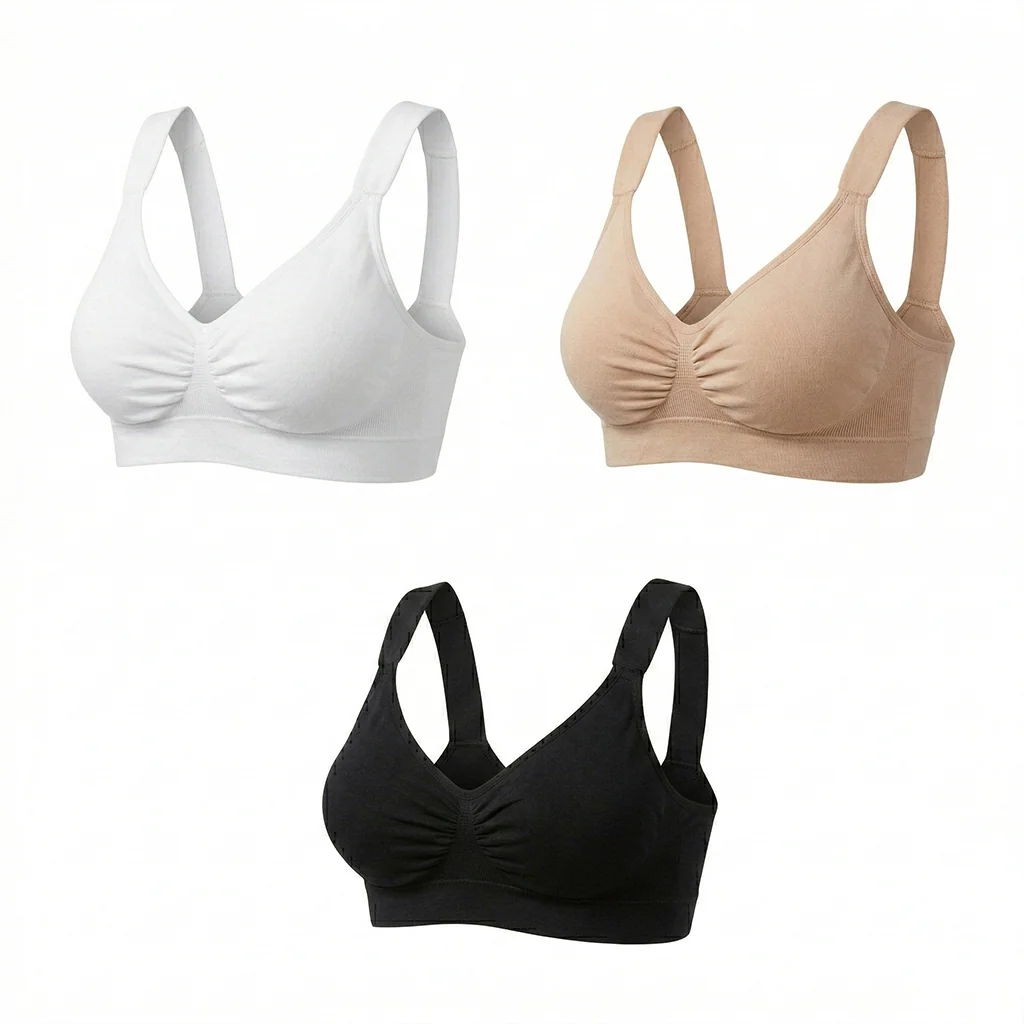
Compression, Encapsulation, and Hybrid Designs
Compression bras press the chest against the ribcage with stretchy fabric, distributing pressure evenly. They work best for smaller cup sizes and lower-impact activities. You pull them on overhead, and they should feel snug without digging.
Encapsulation bras use individual cups and a structured band to support each breast separately, much like an everyday underwire bra but with sportswear materials. Larger cup sizes and high-impact workouts benefit most from this construction. Look for adjustable straps and multiple hook positions for fine-tuning.
Hybrid styles combine both methods — molded or seamed cups for shape, plus compression panels across the sides and back. These deliver encapsulation’s targeted support with compression’s smooth profile. The ultra-stretch fabric we use in several hybrids maintains consistent pressure through a full range of motion while the cups prevent independent movement.

Fit Check After You Order
When your bra arrives, put it on using the loosest hook (if applicable) and adjust straps before you move. Jump in place a few times; your chest should feel secure, not bounce freely or shift sideways.
Check that the band sits level around your ribcage and doesn’t ride up your back when you raise your arms. The underband should rest flat against your sternum without gaping. If straps dig into your shoulders immediately, the band may be too loose — try a smaller band size rather than tightening straps all the way.
Wear the bra around the house for fifteen minutes before your first workout. Any painful pressure points, chafing along seams, or inability to take a full breath means the fit isn’t right. Our sizing guide hub includes exchange instructions and additional fit videos if you need to swap sizes.
Choosing the Right Fit for Your Training
A properly sized sports bra turns distraction into confidence. Start with accurate measurements, match your support level to your workout intensity, and don’t hesitate to try a different construction if your first choice doesn’t feel right.
Our size chart gives you a starting point; your own comfort and performance during movement confirm the fit. If you need help deciding between two sizes or want advice on pairing your sports bra with the rest of your activewear, our customer service team can walk you through the options.
Notes
Start with your regular bra size, then adjust based on the support level you need. Low-impact styles often run true to size; high-impact bras with more structure may feel tighter in the same size, so some customers prefer to go up one band size for comfort during long sessions.
The tek gear sports bra size chart shows alpha-size recommendations next to each band-cup combination, which accounts for the difference in fit across styles.
It should feel snug — you want resistance when you pull it on — but you should still breathe normally and move your arms overhead without restriction. The band will stretch slightly over time, so a brand-new sports bra often feels tighter than it will after a few washes.
If you can fit more than two fingers under the band or if the bra shifts when you jump, it’s too loose.
Most customers wear the same size across our line, but construction differences mean a compression pullover may fit differently than a front-zip encapsulation bra. Each product page includes its own size chart and notes any fit variations.
If you’re between sizes, read the customer reviews on the specific style you want — many reviewers mention whether a bra runs small, large, or true to size.
Choose the larger cup if you want more coverage and a relaxed fit; choose the smaller cup if you prefer maximum compression and a performance-oriented feel. For high-impact activities, sizing up in the cup often provides better support because the fabric has more room to encapsulate without flattening.
You can also try a different construction — switching from compression to encapsulation gives you more size precision because individual cups accommodate shape variations better than stretch fabric alone.
Replace your sports bra every six to twelve months if you train three or more times per week. Elastic loses tension with repeated washing and sweating, so even if the bra looks fine, it may no longer provide adequate support.
Signs it’s time for a new one include a band that rides up during activity, straps that slip off your shoulders, or fabric that’s visibly stretched out when you lay the bra flat.
Yes — our encapsulation and hybrid styles go up to DDD in many band sizes. Look for bras with molded cups, wide underbands, and adjustable straps; those features provide the structure needed to support larger cup volumes during movement.
Compression-only bras typically work best for A through C cups, while D-cup and above benefit from the targeted lift of individual cups.